
Last Issue of FEFCOnnect is out!
Announcing FEFCO Technical Seminar, 23-25 March 2011, Munich, Germany
and latest information on...
The corrugated industry is in a continuous process of change and adaptation. Reasons for this are, in part, inherent to the sector itself: a consequence of continual improvements in raw materials supply, equipment performance, printing and finishing techniques and printing materials such as ink.
Other key reasons however are structural shifts on the demand side: globalisation in the manufacturing industry driving up the pressure to rationalise purchasing, logistics and marketing. More and more, environmental initiatives become a major driver of change for the retail and packaging world.
Retail practices are also shaping the requirements of all players in the supply chain: just-in-time production, product proliferation, improvement in product handling, logistics, etc. These evolutions have a direct or indirect effect and seem to favour more productive equipments and printing processes, especially those that can change and adapt quickly.
The corrugated industry is in constant evolution; today understanding customer's needs along the entire supply chain is one of the priorities, this enables the industry to offer the service and products that clients expect, and at the right price.
1. Innovative design and structure
Design is playing an increasingly important role in the development of corrugated products since it can considerably enhance the value of the contents.
More and more, corrugated transit packaging has to reconcile the needs of purchasing, logistics, quality and production, without forgetting the needs of marketing.
In discount stores particularly, where goods are stocked on the shelves in their outer box, design plays a decisive role. There is a trend for easy to identify, easy to handle, easy to open boxes with high-end graphics! Retail ready Packaging or Shelf Ready packaging, developed for both transit and display, is becoming increasingly popular.
Retailers are pushing for the adoption of this type of packaging, especially in certain product segments, in order to improve product availability in stores and reduce overall supply chain costs.
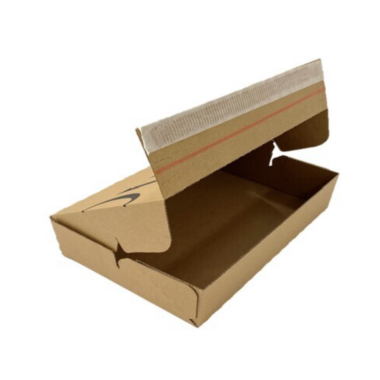
In addition to easy opening, innovative new locking and closure systems now offer even safer transit of goods through direct sales channels such as through-the-post deliveries, as well as tamper-proof packaging for healthcare, food, beverages and household products.
2. Much lighter flutes
Today, micro fluted board opens up new ways for corrugated to develop a wide range of primary packaging in parallel to its applications in traditional secondary packaging. This is a big opportunity as it allows for printing colour graphics more effectively.
The growth in volume of microflute corrugated is expected to be above 10% in the coming years, with its main use being in packaging for toys, consumer durables, white goods, electronics, confectionary, bag-in-box, pizzas, tools, software, automotive parts and wines & spirits.
3. New printing techniques
The introduction of new technologies has had a big impact on packaging production. For example, Digital printing techniques now allow the economical production of prototypes, sales samples, limited production runs for test markets, as well as a remarkable increase in “speed to market” for new product launches!
Recent improvements in flexography have also made it possible for consumer goods manufacturers to reach a “direct to corrugated” print quality for large-scale print runs that rival traditional techniques, as well as being more economic.
4. RFID
Most people admit that this could be a key opportunity for the industry. Although the operational benefits of RFID will not yet offset the high cost of the technology, it is very likely that RFID tags will soon be requested on finished corrugated boxes. For this reason, the industry is closely monitoring this trend and preparing itself to supplying RFID-enabled corrugated containers. When tag cost decline, RFID may well replace barcodes. This is why the corrugated industry feels it has to embrace the development of this new technology. Testing is currently being carried out by FEFCO and throughout the industry in order to be ready when necessary.
5. A wide array of improvements
In parallel to these key trends a wide array of developments are being currently developed by most corrugated companies,
To mention some of them:

It is clear that the increasing impact of R&D in industries outside of corrugated board manufacturing, combined with the industry’s own research, are together, “changing the rules” for corrugated as a packaging material.
Announcing FEFCO Technical Seminar, 23-25 March 2011, Munich, Germany
and latest information on...
We are pleased to inform you that the 16th FEFCO Technical Seminar will take place on 23, 24 and 25...